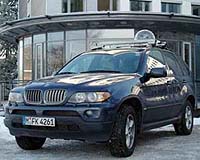
For the system trials, DLR scientists used a vehicle fitted with a radome protecting the satellite reception antenna.
For the system trials, DLR scientists used a vehicle fitted with a radome protecting the satellite reception antenna. |
It is called Ku-Mobil because the information is sent in the Ku-frequency (11 gigahertz) range. The system is somewhat similar to mobile satellite radios used by more than ten million subscribers in the United States. These work just the same as normal radios - as the signal is received, it is sent directly to the loudspeaker.
This transmission concept, however, has been radically redesigned by the DLR scientists. The idea was conceived to transmit stand-alone items such as newscasts, individual music pieces or interviews separately from one another.
A file-based method like this is already established on the Internet with the "Podcast" concept. More than a billion dollars have been invested by the USA in high-performance satellite systems and infrastructures for uninterruptible data flows, which are not required for this new type of delivery system.
The DLR scientists' approach, using existing and retired satellites is considerably more cost-effective and still provides programmes when satellite contact is only occasionally available. If the car's receiver has contact with the satellite, the radio items are received as file packets and saved on the receiver's hard disk.
A "programme file", sent at the same time, determines the order that the files are to be played back, and what is to be played instead if a particular file packet is missing.
A user sitting in an underground car park, for example, where conventional radio is unobtainable, can still listen to music and general items previously stored in the radio's memory and in superb audio quality.
Combinations of different access media are also possible with a "personalised radio programme". A user's favourite music could, for example, come from a normal CD or MP3, with current newscasts or radio articles slotted in between the music tracks. Images, CD artwork, video clips and web-based content could also be transmitted alongside the purely audio programmes.
This vision is now being realised in a consortium lead by SES GLOBAL together with partners SES ASTRA, BMW, Dornier Consulting, Deutsche Welle, the Institut fur Rundfunktechnik GmbH, TriaGnoSys, the University of Braunschweig, and the Fraunhofer Institute for Integrated Circuits. A prototype was jointly developed as commissioned by ESA, and the concept was successfully tested by DLR in several car journeys in and around Munich, Luxembourg and from Amsterdam to Copenhagen.
Related Links
 Split Over CO2 Limits For New Cars As EU Postpones Decision
 Brussels (AFP) Jan 23, 2007
| The content herein, unless otherwise known to be public domain, are Copyright Space.TV Corporation. AFP and UPI Wire Stories are copyright Agence France-Presse and United Press International. ESA Portal Reports are copyright European Space Agency. All NASA sourced material is public domain. Additional copyrights may apply in whole or part to other bona fide parties. Advertising does not imply endorsement, agreement or approval of any opinions, statements or information provided by Space.TV Corp on any Web page published or hosted by Space.TV Corp. Privacy Statement |