 |
 |
 |
 |
 |
 |
 |
 |
 |

 |
Unique Quantum Effect Found In Silicon Nanocrystals
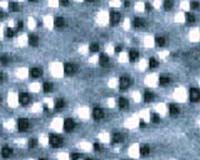
Golden CO (SPX) Jul 27, 2007 Researchers at the U.S. Department of Energy's National Renewable Energy Laboratory (NREL), collaborating with Innovalight, have shown that a new and important effect called Multiple Exciton Generation (MEG) occurs efficiently in silicon nanocrystals. MEG results in the formation of more than one electron per absorbed photon. Silicon is the dominant semiconductor material used in present day solar cells, representing more than 93 percent of the photovoltaic cell market. Until this discovery, MEG had been reported over the past two years to occur only in nanocrystals (also called quantum dots) of semiconductor materials that are not presently used in commercial solar cells, and which contained environmentally harmful materials (such as lead). The new result opens the door to the potential application of MEG for greatly enhancing the conversion efficiency of solar cells based on silicon because more of the sun's energy is converted to electricity. This is a key step toward making solar energy more cost-competitive with conventional power sources. In a paper published on July 24 in the initial on-line version of the American Chemical Society's Nano Letters Journal, an NREL team reported that silicon nanocrystals, or quantum dots, obtained from Innovalight can produce more than one electron from single photons of sunlight that have wavelengths less than 420 nm. When today's photovoltaic solar cells absorb a photon of sunlight, about 50 percent of the incident energy is lost as heat. MEG provides a way to convert some of this energy lost as heat into additional electricity. The silicon nanocrystals produced by Innovalight, Inc., a thin-film solar cell developer based in Santa Clara, California, were studied at NREL as part of a collaboration between NREL and Innovalight scientists. The NREL team consisted of Matthew C. Beard, Kelly P. Knutsen, Joseph M. Luther, Qing Song, Wyatt Metzger, Randy J. Ellingson and Arthur J. Nozik. The findings represent an important extension of the range of semiconductor materials that exhibit MEG and are a further confirmation of pioneering work by Nozik, who in 1997 predicted that semiconductor quantum dots could exhibit efficient electron multiplication and hence increase the efficiency of solar cells. To date, all experiments showing the production of more than one electron per absorbed photon have been based on various types of optical spectroscopy. In a solar cell device it is necessary to extract the electrons produced in the quantum dots and pass them through an external circuit to generate electrical power. Such experiments are currently underway at NREL, Innovalight and other laboratories to demonstrate that MEG can indeed lead to enhanced solar cell efficiencies. Calculations at NREL by Mark Hanna and Nozik have shown that the maximum theoretical efficiency of quantum dot solar cells exhibiting optimal MEG is about 44 percent with normal unconcentrated sunlight and 68 percent with sunlight concentrated by a factor of 500 with special lenses or mirrors. Today's conventional solar cells that produce one electron per photon have maximum efficiencies of 33 percent and 40 percent, respectively, under the same solar conditions. In addition to efficiently extracting the electrons from the quantum dots in solar cells, future research is directed toward producing MEG at wavelengths that have a greater overlap with the solar spectrum, as well as producing a much sharper onset of the MEG processes with decreasing wavelength of the photons. NREL is the U.S. Department of Energy's primary national laboratory for renewable energy and energy efficiency research and development. The NREL research was funded by DOE's Office of Science, Office of Basic Energy Sciences, Division of Chemical Sciences, Geosciences, and Biosciences. NREL is operated for DOE by Midwest Research Institute and Battelle. Related Links National Renewable Energy Laboratory (NREL) Nano Technology News From SpaceMart.com Computer Chip Architecture, Technology and Manufacture
 Scientists Discover New Way To Study Nanostructures
 Atlanta, GA (SPX) Jul 27, 2007
Scientists at the Georgia Institute of Technology have discovered a phenomenon which allows measurement of the mechanical motion of nanostructures by using the AC Josephson effect. The findings, which may be used to identify and characterize structural and mechanical properties of nanoparticles, including materials of biological interest, appear online in the journal Nature Nanotechnology. The AC Josephson effect refers to work that Brian Josephson published in 1962 regarding the flow of an electrical current between superconductors. |
|
|

| The content herein, unless otherwise known to be public domain, are Copyright Space.TV Corporation. AFP and UPI Wire Stories are copyright Agence France-Presse and United Press International. ESA Portal Reports are copyright European Space Agency. All NASA sourced material is public domain. Additional copyrights may apply in whole or part to other bona fide parties. Advertising does not imply endorsement, agreement or approval of any opinions, statements or information provided by Space.TV Corp on any Web page published or hosted by Space.TV Corp. Privacy Statement |