 |
 |
 |
 |
 |
 |
 |
 |
 |

 |
Tracking A Hot Spot In The Center Of The Biggest Ocean On Earth
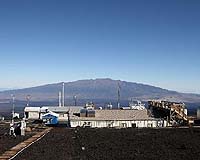
Virginia Key FL (SPX) May 22, 2007 Using a state-of-the-art satellite imagery technique, researchers are able to more precisely predict volcanic activity, bringing them steps closer to understanding where an eruption may occur. A new research study, titled "Stress Control of Deep Rift Intrusion at Mauna Loa Volcano, Hawaii," being published in the May 18 issue of the journal Science uses satellite imagery to study volcanic activity at Mauna Loa on the Big Island of Hawaii. With this new technique, researchers can more precisely forecast locations of volcanic activity -- providing critical information to improve warning systems and hazard assessment of populated areas surrounding one of the world's most naturally dangerous ecosystems, volcanoes. A team of researchers, lead by Dr. Falk Amelung, a geology and geophysics assistant professor at the University of Miami Rosenstiel School of Marine and Atmospheric Science, used interferometric synthetic aperture radar (InSAR) from 2002 to 2005 to obtain images of the ground deformation associated with volcanic activity. Researchers were able to see distinct patterns of magma activity associated with rift zones, long narrow fractures in the earth's crust from which lava flows out. Magma pathways were unclamped by past eruptions and earthquakes, leaving a place for the magma to enter. Magma accumulates in the rift zones, pushed the flanks apart, creating stress in the area that ultimately erupts. "We are able to infer very precisely where magma accumulation occurred and we have an explanation why it occurred in this particular location," Amelung said. "We now have a good idea where the next eruption is most likely to occur. This technique can be employed on other large volcanoes to better forecast eruption locations." Researchers are studying Mauna Loa because it's the largest and one of the most active volcanoes on Earth. The main volcanic hazards, lava flows and flank collapse, can pose a significant hazard to populated areas. Flank collapse, which can trigger tsunamis, creates an additional hazard to these increasingly populated areas of volcano flanks, like Mauna Loa volcano. This research technique can be applied to other active volcanoes, Mt. Etna in Italy, Piton de la Fournaise on Reunion Island, Kilauea in Hawaii, and many others, including in Central America. Related Links University of Miami Rosenstiel School of Marine and Atmospheric Science Earth Observation News - Suppiliers, Technology and Application
 MetOp-A Takes Up Service
 Paris, France (SPX) May 18, 2007
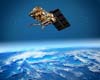
EUMETSAT has just reported that Europe entered a new era of meteorology and climatology when MetOp-A, Europe's first polar-orbiting meteorological satellite, was on 15 May 2007 officially declared operational after only six months of commissioning. |
|
|

| The content herein, unless otherwise known to be public domain, are Copyright Space.TV Corporation. AFP and UPI Wire Stories are copyright Agence France-Presse and United Press International. ESA Portal Reports are copyright European Space Agency. All NASA sourced material is public domain. Additional copyrights may apply in whole or part to other bona fide parties. Advertising does not imply endorsement, agreement or approval of any opinions, statements or information provided by Space.TV Corp on any Web page published or hosted by Space.TV Corp. Privacy Statement |