 |
 |
 |
 |
 |
 |
 |
 |
 |

 |
Tomorrow's Green Nanofactories
Washington DC (SPX) Jul 13, 2007 Viruses are notorious villains. They cause serious human diseases like AIDS, polio, and influenza, and can lead to system crashes and data loss in computers. A new podcast explores how nanotechnology researcher Angela Belcher, from Massachusetts Institute of Technology (MIT), is working with viruses to make them do good things. By exploiting a virus's ability to replicate rapidly and combine with semiconductor and electronic materials, she is coaxing them to grow and self-assemble nanomaterials into a functional electronic device. Through this marriage of nanotechnology with green chemistry, Belcher and her team are working toward building faster, better, cheaper and environmentally-friendly transistors, batteries, solar cells, diagnostic materials for detecting cancer, and semiconductors for use in modern electrical devices-everything from computers to cell phones. Unlike traditional semiconductor or battery manufacturing which requires expensive and toxic chemicals, Belcher's nanofactories generate little waste, grow at room temperature, and promise to be inexpensive and largely biodegradable. Does all this sound too good to be true" Judge for yourself. Listen to an interview with Dr. Belcher, a 2004 winner of a MacArthur Foundation "Genius Award." It is second in an exciting new series of podcasts called Trips to the NanoFrontier. These podcasts are available online here, or directly from Apple's iTunes music store. These podcasts and a recent publication, NanoFrontiers: Visions for the Future, are written by freelance science writer Karen F. Schmidt. Both focus on nanotechnology's ability to address the energy crisis, the need for better medical treatments, and the demand for clean water. They are based on a two-day NanoFrontiers forecasting workshop held in February 2006, sponsored by the National Science Foundation (NSF), National Institutes of Health (NIH), and the Project on Emerging Nanotechnologies, which is an initiative of the Woodrow Wilson International Center for Scholars and The Pew Charitable Trusts. "Nanotechnology is the future. In 2006 alone, governments, corporations, and venture capitalists spent $12 billion on nanotechnology research and development worldwide. Nanotechnology promises to change just about everything-our medical care, energy sources, communications and food. It is leading us to what many in government and industry are calling 'The Next Industrial Revolution.' Society needs to prepare now for how to exploit and harness its potential, especially to ensure that nanotechnology makes possible a greener, more sustainable tomorrow," said David Rejeski, director of the Project on Emerging Nanotechnologies at the Wilson Center. "Dr. Belcher's research with viruses, proteins and yeast offers hope for new, ground-breaking solutions to the world's energy problems. It holds out the prospect of using nanotechnology in a variety of ways, ranging from improving the efficiency of production, storage, and transmission of energy to overcoming many of the obstacles to a hydrogen-based transportation system based on fuel-cell powered cars and trucks," according to Rejeski. Related Links Project on Emerging Nanotechnologies Nano Technology News From SpaceMart.com Computer Chip Architecture, Technology and Manufacture
 Invisible Nano-Fibers Conduct Electricity
 Columbus OH (SPX) Jul 01, 2007
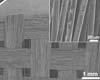
Tiny plastic fibers could be the key to some diverse technologies in the future -- including self-cleaning surfaces, transparent electronics, and biomedical tools that manipulate strands of DNA. In the June issue of the journal Nature Nanotechnology, Ohio State University researchers describe how they created surfaces that, seen with the eye, look as flat and transparent as a sheet of glass. But seen up close, the surfaces are actually carpeted with tiny fibers. |
|
|

| The content herein, unless otherwise known to be public domain, are Copyright Space.TV Corporation. AFP and UPI Wire Stories are copyright Agence France-Presse and United Press International. ESA Portal Reports are copyright European Space Agency. All NASA sourced material is public domain. Additional copyrights may apply in whole or part to other bona fide parties. Advertising does not imply endorsement, agreement or approval of any opinions, statements or information provided by Space.TV Corp on any Web page published or hosted by Space.TV Corp. Privacy Statement |