 |
 |
 |
 |
 |
 |
 |
 |
 |

 |
New Laboratory Will Focus Research On 'Scintillating' Materials
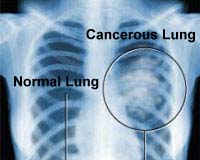
Huntsville AL (SPX) Jan 05, 2007 Using materials that flash when struck by certain types of radiation, sensors developed in a new laboratory at The University of Alabama in Huntsville might help doctors treat cancer, customs agents scan for dirty bombs, and scientists study the furthest reaches of the universe. Scientists and students working in the lab are looking at several possible uses for scintillating materials that have been developed recently, said Dr. Richard Miller, an associate professor of physics at UAH and the project leader. These include a sensor that would help doctors more accurately aim proton beams used in cancer radiation therapy. "As much as possible, you want to focus the radiation on the bad cells and keep it away from the good ones," Miller said. "We think sensors using these new materials might help us do a better job of that." Scintillating materials flash or glow when they are hit by certain types of high energy radiation, which can include X-rays and gamma rays, or by particles such as cosmic rays. The intensity of the flash changes with the energy of the radiation, "so you can infer the energy of the incident radiation, and in some configurations the direction and type of radiation, Miller said. In addition to several possible applications in nuclear medicine, scintillating sensors could be used by homeland security to screen large port or airport facilities for telltale signs of illegal radioactive materials being smuggled into the United States. Advanced scintillators also have significant applications in astrophysics and planetary exploration. Because they react to otherwise "invisible" radiation but flash in visible light, these scintillating materials might also be coupled with other sensors to create powerful telescopes that astronomers could use to study the most energetic stars and the most powerful explosions in the universe. Miller's group is also looking at sensors that might help scientists "prospect" on other planets without leaving orbit by picking up the unique signatures of radiation coming up from different elements on a planet's surface. UAH's new Laboratory for Advanced Scintillating Materials Applications will be set up in an existing clean room in UAH's Optics Building. Related Links University of Alabama Huntsville Space Technology News - Applications and Research
 New Molecules Fastest Ever For Optical Technologies
 Washington WA (SPX) Jan 05, 2007
The internet could soon shift into overdrive thanks to a new generation of optical molecules developed and tested by a team of researchers from Washington State University, the University of Leuven in Belgium and the Chinese Academy of Science in China. |
|
|

| The content herein, unless otherwise known to be public domain, are Copyright Space.TV Corporation. AFP and UPI Wire Stories are copyright Agence France-Presse and United Press International. ESA Portal Reports are copyright European Space Agency. All NASA sourced material is public domain. Additional copyrights may apply in whole or part to other bona fide parties. Advertising does not imply endorsement, agreement or approval of any opinions, statements or information provided by Space.TV Corp on any Web page published or hosted by Space.TV Corp. Privacy Statement |