 |
 |
 |
 |
 |
 |
 |
 |
 |

 |
New Family Of Pseudo-Metallic Chemicals Could Create New Electronic Materials
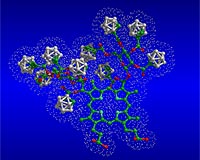
Columbia, MO (SPX) Apr 25, 2007 The periodic table of elements, all 111 of them, just got a little competition. A new discovery by a University of Missouri-Columbia research team, published in Angewandte Chemie, the journal of the German Society of Chemists, allows scientists to manipulate a molecule discovered 50 years ago in such as way as to give the molecule metal-like properties, creating a new, "pseudo" element. The pseudo-metal properties can be adjusted for a wide range of uses and might change the way scientists think about attacking disease or even building electronics. Five decades ago, Fred Hawthorne, professor of radiology and director of the International Institute for Nano and Molecular Medicine at MU, discovered an extremely stable molecule consisting of 12 boron atoms and 12 hydrogen atoms. Known as "boron cages," these molecules were difficult to change or manipulate, and sat dormant in Hawthorne's laboratory for many years. Recently, Hawthorne's scientific team found a way to modify these cages, resulting in a large, new family of nano-sized compounds. In their study, which was published this month, Hawthorne, and Mark Lee, assistant professor at the institute and first author of the study, found that attaching different compounds to the cages gave them the properties of many different metals. "Since the range of properties for these pseudo-metals is quite large, they might be referred to as 'psuedo-elements belonging to a completely new pseudo-periodic table,'" Lee said. Potential applications of this discovery are abundant, especially in medicine. "All living organisms are essentially a grand concert of chemical reactions involving the transfer of electrons between molecules and metals," Lee said. "The electron transfer properties of this new family of molecules span the entire range of those found within living systems. Because of this, these pseudo-metals may be tuned for use as specific probes in living systems to detect or treat disease at the earliest state." In addition, because the compounds possess such a wide range of flexibility, they might have ramifications for nanotechnology and various kinds of electronics. "This single discovery could open entirely new fields of study because of the controlled variability of the compounds," Lee said. "We have the ability to change the properties of these pseudo-metals, which gives us the opportunity to tailor them to our needs, whether that is biomedical, chemical or electronic applications, some of which may utilize nanoscience." Related Links University of Missouri-Columbia Powering The World in the 21st Century at Energy-Daily.com Our Polluted World and Cleaning It Up China News From SinoDaily.com Global Trade News The Economy All About Solar Energy at SolarDaily.com Civil Nuclear Energy Science, Technology and News Space Technology News - Applications and Research
 Scientists Design New Super-Hard Material
 Los Angeles CA (SPX) Apr 25, 2007
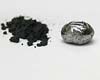
Ultra-hard materials are used for everything from drills that bore for oil and build new roads to scratch-resistant coatings for precision instruments and the face of your watch. UCLA scientists are now reporting a promising new approach to designing super-hard materials, which are very difficult to scratch or crack. Their findings appear in the April 20 issue of the journal Science. |
|
|

| The content herein, unless otherwise known to be public domain, are Copyright Space.TV Corporation. AFP and UPI Wire Stories are copyright Agence France-Presse and United Press International. ESA Portal Reports are copyright European Space Agency. All NASA sourced material is public domain. Additional copyrights may apply in whole or part to other bona fide parties. Advertising does not imply endorsement, agreement or approval of any opinions, statements or information provided by Space.TV Corp on any Web page published or hosted by Space.TV Corp. Privacy Statement |