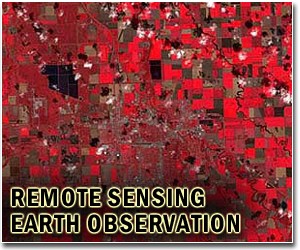
NASA says strong support from the White House and Congress will allow it to plan extensive Earth science programs with 16 major missions between 2011 and 2021.
In contrast to late 2009 when NASA's Earth Science Division faced constrained funding, the current five-year spending plan calls for an additional $2.4 billion over the previous budget, SPACE.com reported this week.
"What a difference a year makes," Michael Freilich, director of NASA's Earth Science Division, said at a recent meeting of the American Geophysical Union. "Last year things were a little bit dicey. This year we are moving forward rather dramatically."
NASA says it plans to launch three Earth science satellites in 2011 — a climate monitoring satellite in February; a joint U.S.-Argentina sea-surface salinity mission in June; and a polar-orbiting environmental research satellite in October.
NASA is also expanding its Earth science emphasis on providing long-term climate data records.
"The administration for the first time gave NASA the mandate to examine how we might contribute to climate continuity," Freilich said.
Share This Article With Planet Earth