 |
 |
 |
 |
 |
 |
 |
 |
 |

 |
Hybrid Computer Materials May Lead To Faster, Cheaper Technology
Columbia MO (SPX) Apr 08, 2008 A modern computer contains two different types of components: magnetic components, which perform memory functions, and semiconductor components, which perform logic operations. A University of Missouri researcher, as part of a multi-university research team, is working to combine these two functions in a single hybrid material. This new material would allow seamless integration of memory and logical functions and is expected to permit the design of devices that operate at much higher speeds and use considerably less power than current electronic devices. Giovanni Vignale, MU physics professor in the College of Arts and Science and expert in condensed matter physics, says the primary goal of the research team, funded by a $6.5 million grant from the Department of Defense, is to explore new ways to integrate magnetism and magnetic materials with emerging electronic materials such as organic semiconductors. The research may lead to considerably more compact and energy-efficient devices. The processing costs for these hybrid materials are projected to be much less than those of traditional semiconductor chips, resulting in devices that should be less expensive to produce. "In this approach, the coupling between magnetic and non-magnetic components would occur via a magnetic field or flow of electron spin, which is the fundamental property of an electron and is responsible for most magnetic phenomena," Vignale said. "The hybrid devices that we target would allow seamless integration of memory and logical function, high-speed optical communication and switching, and new sensor capabilities." Vignale studies processes by which magnetic information can be transferred from a place to another. "One of the main theoretical tools I will be using for this project is the time-dependent, spin-current density functional theory," Vignale said. "It is a theory to which I have made many contributions over the years. The results of these theoretical calculations will be useful both to understand and to guide the experimental work of other team members." Related Links University of Missouri-Columbia Computer Chip Architecture, Technology and Manufacture Nano Technology News From SpaceMart.com
 Intel unveils tiny chips tailored for mobile Internet gadgets
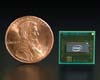 San Francisco (AFP) April 2, 2008
The world's biggest computer chip maker Intel unveiled on Wednesday a set of tiny "Atom" processors it says will give mobile devices desktop computing power. |
|
|

| The content herein, unless otherwise known to be public domain, are Copyright Space.TV Corporation. AFP and UPI Wire Stories are copyright Agence France-Presse and United Press International. ESA Portal Reports are copyright European Space Agency. All NASA sourced material is public domain. Additional copyrights may apply in whole or part to other bona fide parties. Advertising does not imply endorsement, agreement or approval of any opinions, statements or information provided by Space.TV Corp on any Web page published or hosted by Space.TV Corp. Privacy Statement |