
. Space Industry and Business News .


.
TECH SPACE
Elusive metal discovered
by Staff Writers
Washington DC (SPX) Aug 24, 2012

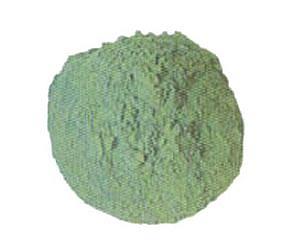
File image.

Carnegie scientists are the first to discover the conditions under which nickel oxide can turn into an electricity-conducting metal. Nickel oxide is one of the first compounds to be studied for its electronic properties, but until now scientists have not been able to induce a metallic state.

The compound becomes metallic at enormous pressures of 2.4 million times the atmospheric pressure (240 gigapascals). The finding is published in Physical Review Letters.

"Physicists have predicted for decades that the nickel oxide would transition from an insulator-a compound that does not conduct electricity-to a metal under compression, but their predictions have not previously been confirmed," remarked team leader Viktor Struzhkin of Carnegie's Geophysical Laboratory.

"This new discovery has been a goal in physics that ranks as high as achieving metallic hydrogen, but for metal oxides."

The outer shells of atoms contain what are called valence electrons, which play a large role in electrical and chemical behavior. Metals generally have one to three of these valence electrons, while non-metals have between five and seven. Metals are good conductors of electricity because the valence electrons are loosely bound, so the electrons are free to flow through the material.

Nickel oxide is what is called a transition metal oxide, which despite its partially filled outer shell of electrons, remains an insulator. The scientists placed thin crystal samples, no more than one millionth of a meter (micron) thick, into a custom-designed diamond anvil cell. Four thin foil leads were crafted to allow the measurements.

The researchers were able to measure declining electronic resistance beginning at 1.3 million atmospheres (130 gigapascals). At 2.4 million atmospheres there was a dramatic, three-order-of-magnitude drop in electronic resistance indicating a change from a semiconducting to a metallic state. The metallic part of the material was located in the region of highest compression.

"This finding is certainly important in providing a better understanding of advanced electronic materials," said Alexander Gavriliuk, first author of the publication and a visiting scientist at Carnegie's Geophysical Laboratory.

"But it also gets us closer to the ultimate goal of the condensed matter science-improving theory so it can predict the properties of new materials and then guiding their preparation for practical use."

Related Links
Carnegie Institution
Space Technology News - Applications and Research


.
.
Get Our Free Newsletters Via Email
...
Buy Advertising Editorial Enquiries


.

. Comment on this article via your Facebook, Yahoo, AOL, Hotmail login.

Share this article via these popular social media networks
del.icio.usdel.icio.us DiggDigg RedditReddit GoogleGoogle


TECH SPACE
Northwestern scientists create chemical brain
Evanston IL (SPX) Aug 24, 2012
Northwestern University scientists have connected 250 years of organic chemical knowledge into one giant computer network - a chemical Google on steroids. This "immortal chemist" will never retire and take away its knowledge but instead will continue to learn, grow and share. A decade in the making, the software optimizes syntheses of drug molecules and other important compounds, combines ... read more


TECH SPACE
Apple scores huge win over Samsung in patent case

New catalyst could improve production of glass alternatives

Apple patent win may reshape sector, slow Google

Elusive metal discovered

TECH SPACE
Raytheon unveils cross domain strategy to securely access information via mobile devices

NATO Special Forces Taps Mutualink for Global Cross Coalition Communications

Northrop Grumman Demonstrates Integrated Receiver Circuit Under DARPA Program

Boeing Receives 10th WGS Satellite Order from USAF

TECH SPACE
Satellite preparations move into full swing for the next Arianespace Soyuz mission from French Guiana

Russian Booster Rocket Lifts US Satellite in Seaborne Launch

India's GSAT-10 satellite continues its checkout for the upcoming Arianespace Ariane 5 mission

Flight Readiness Review Complete; No Constraints to Aug. 23 Launch

TECH SPACE
A GPS in Your DNA

Next Galileo satellite reaches French Guiana launch site

Raytheon completes GPS OCX iteration 1.4 Critical Design Review

Mission accomplished, GIOVE-B heads into deserved retirement

TECH SPACE
Swiss fighter jet purchase details agreed despite criticism

Enstrom completes Thai helicopter delivery

Peru on track to build new Cusco airport

Iraq expects first F-16 fighter jets in 2013

TECH SPACE
How to feed data-hungry mobile devices? Use more antennas

Mini-camera with maxi-brainpower

Future memory

A new route to dissipationless electronics

TECH SPACE
Vecmap tracks the Asian bush mosquito

NASA Selects Combined Data Services Contract For Polar Satellites

Proba-1 microsat snaps Olympic neighbourhood

Sparse microwave imaging: A new concept in microwave imaging technology

TECH SPACE
Earthworms soak up heavy metal

Italians protest against pollution from steelworks

Vietnam, US begin historic Agent Orange cleanup

Worldwide increase of air pollution


Memory Foam Mattress Review

Newsletters :: SpaceDaily Express :: SpaceWar Express :: TerraDaily Express :: Energy Daily
XML Feeds :: Space News :: Earth News :: War News :: Solar Energy News

.

The content herein, unless otherwise known to be public domain, are Copyright 1995-2012 - Space Media Network. AFP, UPI and IANS news wire stories are copyright Agence France-Presse, United Press International and Indo-Asia News Service. ESA Portal Reports are copyright European Space Agency. All NASA sourced material is public domain. Additional copyrights may apply in whole or part to other bona fide parties. Advertising does not imply endorsement,agreement or approval of any opinions, statements or information provided by Space Media Network on any Web page published or hosted by Space Media Network. Privacy Statement