 |
 |
 |
 |
 |
 |
 |
 |
 |

 |
DOE Office Of Science Awards 95 Million Hours Of Supercomputing Time To Advance Research
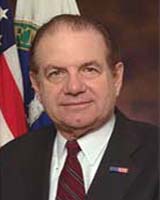
Washington DC (SPX) Jan 09, 2007 The U.S. Department of Energy's (DOE) Office of Science announced today that 45 projects were awarded a total of 95 million hours of computing time on some of the world's most powerful supercomputers as part of its 2007 Innovative and Novel Computational Impact on Theory and Experiment (INCITE) program. DOE's Under Secretary for Science Dr. Raymond Orbach presented the awards at the Council on Competitiveness in Washington, DC. Supercomputers are playing an increasingly important role in scientific research by allowing scientists to create more accurate models of complex processes, simulate problems once thought to be impossible, and to analyze the increasing amount of data generated by experiments. The supercomputers will allow cutting-edge research and design of virtual prototypes to be carried out in weeks or months, rather than the years or decades that would be needed using conventional computing systems. "The Department of Energy's Office of Science has one of the top ten most powerful supercomputers in the world and 4 of the top 100 and we're proud to provide these resources to help researchers advance scientific knowledge and understanding," Energy Secretary Samuel W. Bodman said. "I look forward to witnessing the promise of these efforts as some of the world's greatest thinking minds use some of the world's greatest thinking computers." Of the programs selected, nine are from industry and include five new proposals and four continuations from last year. This will double the number of companies with INCITE awards in 2007 compared to 2006 - a clear indication that U.S. industry has realized the potential benefits of our nation's investment in high-end computing. Launched in 2003, the INCITE mission is to advance American science and industrial competitiveness. These awards will assist in that mission by support computationally intensive, large-scale research projects and award them large amounts of dedicated time on DOE supercomputers. The projects, with applications from aeronautics to astrophysics, consumer products to combustion research, were competitively chosen based on the potential impact of the science and engineering research and the suitability of the project for use of supercomputers. "One of the most important aspects of the INCITE program is that the resulting knowledge will largely be available, so that the information and technologies can be used by other researchers, further broadening the impact of this work," Dr. Orbach said. "Our scientific leadership underpins nearly every aspect of our economy and by making these resources available to a broad range of science and engineering disciplines, we believe the resulting work will make us more competitive in the years and decades to come." Processor-hours refer to how time is allocated on a supercomputer. A project receiving one million hours could run on 2,000 processors for 500 hours, or about 21 days. Running a one-million-hour project on a single-processor desktop computer would take more than 114 years. Research areas to be addressed in 2007 include accelerator physics, astrophysics, chemical sciences, climate research, computer science, engineering physics, environmental science, fusion energy, life sciences, materials science, nuclear physics and nuclear engineering. Fact sheets describing the projects can be found at: http://www.science.doe.gov/ . Practical applications of the research include designing quieter cars, improving commercial aircraft design, advancing fusion energy, studying supernova, understanding nanomaterials, studying global climate change, and the causes of Parkinson's disease. For 2007, the projects were awarded time at DOE's Leadership Computing Facilities at Oak Ridge National Laboratory in Tennessee and Argonne National Laboratory in Illinois, the National Energy Research Scientific Computing Center at Lawrence Berkeley National Laboratory in California, and the Molecular Science Computing Facility at Pacific Northwest National Laboratory in Washington. Industrial firms receiving new 2007 INCITE awards include Corning Inc., Fluent Inc., General Atomics, and Procter and Gamble. Firms with renewed awards are DreamWorks Animation, Pratt and Whitney, The Boeing Co., and General Atomics. University researchers receiving INCITE awards represent Auburn University; Fisk University; Northwestern University; the University of Alaska, Fairbanks; the University of California campuses at Davis, Los Angeles, San Diego and Santa Cruz; the University of Chicago; the University of Colorado; the University of Michigan; the University of Rochester; the University of Washington; and the University of Wisconsin-Madison. DOE scientists receiving awards conduct research at Argonne, Lawrence Berkeley, Los Alamos, Oak Ridge and Sandia National Laboratories, Thomas Jefferson National Accelerator Facility, the Princeton Plasma Physics Lab and the Stanford Linear Accelerator Center. Awards were also made to researchers at the National Center for Atmospheric Research, NASA's Goddard Space Flight Center, the National Oceanographic and Atmospheric Administration and the Max-Planck Institute for Quantum Optics in Germany. Related Links US Department of Energy Space Technology News - Applications and Research
 The Key To Peace Is The Golan Heights
 Washington (UPI) Jan 05, 2007
To open a door, you need a key. And to open peace talks in the Middle East, you also need a key. In the latter case the key is the Golan Heights. Captured from Syria by Israel in the June 6, 1967 Six Day War, recuperating the Heights remains a major priority for the Syrian government. Without the Golan, no peace initiative in the Middle East would have much of a chance. As an official government Syrian newspaper put it in an editorial earlier this week, "for Syria the Golan is the key." |
|
|

| The content herein, unless otherwise known to be public domain, are Copyright Space.TV Corporation. AFP and UPI Wire Stories are copyright Agence France-Presse and United Press International. ESA Portal Reports are copyright European Space Agency. All NASA sourced material is public domain. Additional copyrights may apply in whole or part to other bona fide parties. Advertising does not imply endorsement, agreement or approval of any opinions, statements or information provided by Space.TV Corp on any Web page published or hosted by Space.TV Corp. Privacy Statement |