 |
 |
 |
 |
 |
 |
 |
 |
 |

 |
Chemists Identify Organic Molecules That Mimic Metals
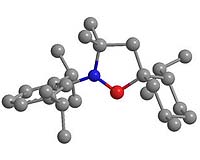
Riverside, CA (SPX) Apr 23, 2007 A limitation in using hydrogen as a fuel in hydrogen-powered vehicles is the difficulty involved in storing it in a cost-effective and convenient manner. While it is possible to store hydrogen using metals, the resulting products often can be prohibitively expensive and cause environmental problems. Chemists at UC Riverside now offer a possible solution. A class of carbenes - molecules that have unusual, highly reactive carbon atoms - can mimic, to some extent, the behavior of metals, the chemists have found. Called cyclic alkyl amino carbenes or CAACs, these organic molecules, the researchers report, could be used to develop carbon-based systems for storing hydrogen. Study results appear in the April 20 issue of Science. In their experiments, the researchers found that the CAACs can split hydrogen under extremely mild conditions, a behavior that has long been seen in metals reacting with hydrogen. "The mode of action of these organic molecules, however, is totally different from that of metals," said Guy Bertrand, a distinguished professor of chemistry who led the research. "Moreover, the CAACs are able to split ammonia as well - an extremely difficult task for metals." Bertrand explained that such a splitting of ammonia, under certain conditions, can pave the way for transforming abundant and inexpensive ammonia into useful amino compounds used to make pharmaceuticals and bulk industrial materials. "This is one of the top challenges for the 21st century," he said. According to the UCR research team, the metal-mimicking carbenes offer another low-cost and low-toxicity benefit: Scientists now may be able to use non-metallic catalysts for a reaction, called "hydrogenation reaction," which plays a critical role in the food, petrochemical and pharmaceutical industries. In their study, the researchers exposed a solution of CAACs to both gaseous hydrogen and liquid ammonia. "We used nuclear magnetic resonance spectroscopy to analyze the products," said Guido Frey, the first author of the research paper and a postdoctoral fellow, supported by the Alexander von Humboldt Foundation, in Bertrand's lab. "And we used single crystal X-ray diffraction analysis to confirm the structure of the products." A carbene is a molecule that has a carbon atom with six electrons instead of the usual eight. Because of the electron deficiency, carbenes are highly reactive and usually unstable in nature. Related Links University of California - Riverside Powering The World in the 21st Century at Energy-Daily.com Our Polluted World and Cleaning It Up China News From SinoDaily.com Global Trade News The Economy All About Solar Energy at SolarDaily.com Civil Nuclear Energy Science, Technology and News Space Technology News - Applications and Research
 Rolls-Royce Selects Bristol University For Composites Research
 Bristol, UK (SPX) Apr 18, 2007
Rolls-Royce has opened a new University Technology Centre (UTC) in Composites at the University of Bristol to further develop this technology for future products across its aerospace, marine and energy markets. |
|
|

| The content herein, unless otherwise known to be public domain, are Copyright Space.TV Corporation. AFP and UPI Wire Stories are copyright Agence France-Presse and United Press International. ESA Portal Reports are copyright European Space Agency. All NASA sourced material is public domain. Additional copyrights may apply in whole or part to other bona fide parties. Advertising does not imply endorsement, agreement or approval of any opinions, statements or information provided by Space.TV Corp on any Web page published or hosted by Space.TV Corp. Privacy Statement |