 |
 |
 |
 |
 |
 |
 |
 |
 |

 |
Bird Watchers And Space Technology Come Together In New Study
MSU News Service Bozeman MT (SPX) Jun 26, 2008 Almost every June for 30 years, Terry McEneaney drove around Yellowstone National Park and listed every bird he heard along three routes. Park ornithologist at the time, he would drive to a designated spot and identify the birds there. Then he'd drive another half mile, repeat the process and continue until he had stopped 50 times in 24.5 miles for the North American Breeding Bird Survey. Trying to finish before the birds quit singing, he'd ignore the scenery as best he could and try not to let the traffic bother him. "You have to start very early and have to be done about 9:30. Birds stop singing about 9:30," McEneaney said. "You have to really hustle from point to point." McEneaney no longer works for the National Park Service. He retired in November. But the information he gathered is part of a new Montana State University study that looks at biodiversity across North America. Thousands of bird watchers and a satellite sensor developed at the University of Montana yielded data for the continental study. "I had a feeling somebody would use it somehow," McEneaney said. MSU's results will be described in at least three scientific papers, the first to be published this summer in the journal "Remote Sensing of the Environment," said Linda Phillips, lead author and a research scientist at MSU. Co-authors are Andy Hansen, an MSU ecologist; and Curtis Flather with the USDA Forest Service in Fort Collins, Colo. The paper reports that the UM satellite sensor, a Moderate Resolution Imaging Spectroradiometer, works far better than other types of remote sensing technology for broad-scaled ecological studies, Phillips said. First launched in 1999 on the Terra satellite, MODIS improves on previous technology and provides more comprehensive measures of vegetation. "In simple terms, MODIS is like an expensive Nikon camera compared to a pocket disposable camera for picture quality," said Steve Running of UM, Regents Professor of Ecology and director of the Numerical Terradynamics Simulation Group. "It is very difficult to study bird breeding habitat over large area from ground surveys, as birds are so mobile," he added. "MODIS allows a broad regional view of the landscape similar to the view birds have from the air." Running and a team at UM developed MODIS. The sensor detects information about vegetation across North America and sends it to a clearinghouse in Sioux Falls, S.D. The bird data for MSU's study came from thousands of bird watchers -- mostly volunteers --who participated in the North American Breeding Bird Survey. The survey is a joint effort of the U.S. Geological Survey and the Canadian Wildlife Service to monitor the status and trends of some 400 bird populations. It began about 40 years ago. The bird watchers, using the same techniques as McEneaney, covered almost 3,500 routes in the continental United States, Canada and Alaska, Phillips said. MSU obtained their reports from a clearinghouse in Maryland, then analyzed 1,390 of the routes and combined the results with those from MODIS. "I'm sure the volunteers had no idea we would be using their data in such a sophisticated way," Phillips said. Hansen said, "It's a really neat example of how volunteer efforts, mixed with NASA satellite program, allow us to learn things we never would have thought possible to examine at a national scale." MSU's study typifies the kind of research conducted in his Landscape Biodiversity Lab and speaks well of the Montana University System, Hansen said. "Who would have thought that our local universities were designing satellite sensors, being responsible for putting them in space, generating all this data and now we are using that data across the continent for understanding things like conservation and land use issues?" Hansen commented. The next two papers from MSU's study will focus on ecological and management findings, the researchers said. Related Links MSU Earth Observation News - Suppiliers, Technology and Application
 Ocean Satellite Launch Critical To Australian science
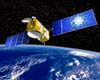 North Ryde, Australia (SPX) Jun 25, 2008
Jason-2, or the Ocean Surface Topography Mission (OSTM), is a joint venture between NASA's Jet Propulsion Laboratory, the US National Oceanic and Atmospheric Administration (NOAA), the French Space Agency (CNES) and the European Meteorology Satellite service (EUMETSAT). |
|
|

| The content herein, unless otherwise known to be public domain, are Copyright Space.TV Corporation. AFP and UPI Wire Stories are copyright Agence France-Presse and United Press International. ESA Portal Reports are copyright European Space Agency. All NASA sourced material is public domain. Additional copyrights may apply in whole or part to other bona fide parties. Advertising does not imply endorsement, agreement or approval of any opinions, statements or information provided by Space.TV Corp on any Web page published or hosted by Space.TV Corp. Privacy Statement |