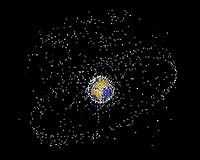
In a recent editorial, Launchspace asked their readers to send suggestions on how to solve the space debris problem. We had a great response, and the suggestions fall into two main categories:
1. Limiting new debris through such means as de-orbiting mechanisms integrated into the design of future satellites and
2. Eliminating existing space debris.
If we are to save space as a useful asset for human enterprise, both of these categories must be addressed.
In fact, there is already general agreement among space-faring nations that new spacecraft be capable of:
(a) minimizing new debris by not releasing non-essential parts into space; and
(b) have the ability to move a satellite into a higher orbit or de-orbit it at end-of-life.
In most cases, low orbiting satellites can cause their own de-orbit when the useful mission is completed. However, the debris problem continues to increase due to collisions and failures. Thus, we must actively attack the problem of debris elimination. And, as we mentioned in the prior editorial, our focus is on this problem.
Thanks to our readers, we can offer brief descriptions of a few interesting submissions:
+ Use a ground based-laser that can track specific debris pieces and hit them with enough energy to change their orbits. This was submitted by multiple contributors.
+ Utility satellites such as "garbage scows" were suggested. Such spacecraft can maneuver up to single debris pieces and capture one at a time. These could be robotic or crewed and would eventually de-orbit themselves for disposal or later reuse.
+ Create a financial prize for some entrepreneur to retrieve debris.
+ Create a football-field-size drag net using multiple satellites to maintain tension.
+ A number of tether technologies were proposed from multiple sources.
+ More than one contributor suggested passive devices such as "sweepers" and "absorption spheres."
This is just the tip of your contribution and over the next few weeks Launchspace will post more details about the ideas submitted.