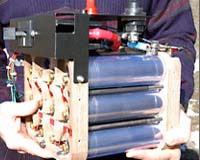
Toyota has safety concerns about lithium-ion batteries.
Toyota has safety concerns about lithium-ion batteries. |
It said such fears were heightened by problems with similar batteries made by Sony Corp. for laptop computers which prompted a massive recall last year.
The Japanese auto giant, which is enjoying brisk sales of its fuel-efficient vehicles, was planning to launch a dozen hybrids using the new lithium-ion battery technology in the US market between 2008 and 2010, the report said.
A delay would give its rivals such as General Motors Corp. a chance to catch up in the development of future hybrids, it noted.
Toyota officials declined to comment on the report.
"It's our policy not to talk about our future product launches and product strategy," said Toyota spokesman Tomomi Imai.
He said the automaker had not yet announced any launch dates for hybrid vehicles with lithium-ion batteries.
Toyota hybrids currently use nickel-metal-hydride batteries.
Hybrids with lithium-ion batteries could achieve 60 to 70 miles a gallon in normal operation, compared with the existing Prius's 40 to 50 miles per gallon.
The first Toyota hybrid with lithium-ion battery technology now will not be launched in the United States until early 2011, the Journal quoted unnamed company executives as saying.
The automaker also delayed plans for hybrid versions of its Tundra pickup and Sequoia sports utility vehicle, it added.
The Japanese automaker, which is battling General Motors for the title of world number one, pioneered mass production of the low pollution petrol-electric hybrid vehicles along with rival Honda.
Toyota has sold more than one million hybrids since they were introduced a decade ago.
Related Links
 GM Sales In China To Hit One Million Vehicles
 Detroit (AFP) Aug 09, 2007
| The content herein, unless otherwise known to be public domain, are Copyright Space.TV Corporation. AFP and UPI Wire Stories are copyright Agence France-Presse and United Press International. ESA Portal Reports are copyright European Space Agency. All NASA sourced material is public domain. Additional copyrights may apply in whole or part to other bona fide parties. Advertising does not imply endorsement, agreement or approval of any opinions, statements or information provided by Space.TV Corp on any Web page published or hosted by Space.TV Corp. Privacy Statement |