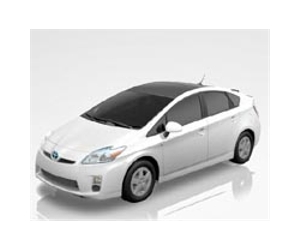
Toyota's fuel-sipping Prius was the best-selling car in Japan last year, becoming the first hybrid to top the annual rankings, industry figures showed Friday.
Toyota sold 208,876 petrol-electric Prius vehicles in 2009, far ahead of the runner-up, Honda's non-hybrid Fit, which sold 157,324, according to the Japan Automobile Dealers Association.
The rankings exclude popular mini-vehicles with engines of up to 660cc.
The Prius has been Japan's top-selling car since May, when Toyota — the world's largest automaker — rolled out a cheaper, revamped model boasting a fuel-efficiency of 38 kilometres per litre.
Prius sales almost tripled in 2009 from the previous year, while Honda's Insight hybrid ranked fifth with sales of 93,283 vehicles, the association reported.
Japanese automakers have made strides with hybrid cars because of high oil prices and growing concern about emissions blamed for global warming.
Sales of hybrids are also getting a boost from the government incentives in Japan for drivers to purchase less polluting vehicles.
Automakers hope that the popularity of fuel-efficient vehicles, helped by government tax breaks, will re-energise the flagging auto market, which has been battered by the global economic downturn.
But hybrids face competition from pure electric vehicles. Mitsubishi Motors has rolled out its "i-MiEV" mini-electric car while Fuji Heavy Industries launched the Subaru Plug-in STELLA.
Nissan, Japan's third largest automaker, was slower than Toyota and Honda to embrace fuel-sipping petrol-electric hybrids but is preparing to launch its first all electric car, the Leaf, in late 2010 in Japan.
earlier related report
China auto sales exceed 13.5 million in 2009: state media
Beijing (AFP) Jan 8, 2010 –
China's auto sales and output exceeded 13.5 million units in 2009, state media reported Friday, cementing the Asian giant's status as the world's biggest car market.
Vehicle sales rose more than 40 percent from a year earlier, Xinhua news agency said, citing figures provided by an unnamed source.
Xinhua did not provide a percentage increase for output.
In 2008, auto sales rose around eight percent to 9.4 million units, according to official figures.
The China Association of Automobile Manufacturers is expected to release the official data on Monday, Xinhua said.
China's car sales soared in 2009 due to government policy incentives, outstripping those of the United States for the first time in January last year to make the nation the world's biggest auto market.
Government measures included slashing taxes on cars with engines smaller than 1.6 litres and subsidising clean-technology vehicles. The government also subsidised auto purchases for farmers.
US auto sales fell 21.2 percent to 10.43 million vehicles in 2009, according to Autodata figures released this week.
Share This Article With Planet Earth