SPACE MART SPACE DAILY SPACE WAR TERRA DAILY MARS DAILY SPACE TRAVEL GPS DAILY ENERGY DAILY
  Space Industry and Business News  
Get Our Free Newsletters Via Email
  
Search All Our Sites at SpaceBank
The Trouble With Hybrids

The researchers concede that, "The quest for low emission, clean, and high-mileage vehicles is on its way and should be at the top of the manufacturers' agenda," they say. However, they suggest that the technology, marketing, and public perception leads to one overriding problem: Is a hybrid strategy sustainable in the long run?
by Staff Writers
Paris, France (SPX) Feb 08, 2008
Hybrid electric vehicles that run on both conventional gasoline and stored electricity can be no more than a stop gap until more sustainable technology is developed, according to researchers in France. Writing in the Inderscience publication International Journal of Automotive Technology and Management, they suggest that the adoption of HEVs might even slow development of more sustainable fuel-cell powered electric vehicles.

Jean-Jacques Chanaron Research Director within the French National Centre for Scientific Research (CNRS) and Chief Scientific Advisor at the Grenoble School of Management and Julius Teske at Grenoble, question strongly whether the current acceptance of hybrid vehicle technology particularly in the USA is in any way environmentally sustainable.

The researchers have analyzed the spread of this technology including the non-financial drivers for its adoption. They point out that most manufacturers are rapidly integrating hybrid electric vehicles into their technology portfolio, despite the absence of significant profitability.

They add that the misinformed craze for hybrid vehicles especially in the USA, and increasingly in Japan and Europe, and potentially in China, could represent a red light for more innovative technologies, such as viable fuel-cell cars that can use sustainably sourced fuels, such as hydrogen. They concur with earlier studies that suggest that hydrogen fuel cells will not be marketable in high volumes before at least 2025.

This could, however, be too late for some models of climate change and emissions reduction. They also point out that even fuel cell technology has its drawbacks and much of the marketing surrounding its potential has emerged only from the hydrogen lobby itself.

"There is a general convergence of strategies towards promoting hybrid vehicles as the mid-term solution to very low-emission and high-mileage vehicles," the researchers assert, "this is largely due to Toyota's strategy of learning the technology, while building up its own 'quasi-standard', thanks to its high-quality and reliability reputation and its high market share on the North American market."

They add that, "Such a convergence is based more on customer perception triggered by very clever marketing and communication campaigns than on pure rationale scientific arguments and may result in the need for any manufacturer operating in the USA to have a hybrid electric vehicle in its model range in order to survive."

Moreover, political pressures also play a significant part. The three major US manufacturers - GM, Ford, and Chrysler - recently urged President Bush to financially and politically support a national technological solution for hybrids; this was independent of the currently dominant solutions initiated by Toyota.

The researchers concede that, "The quest for low emission, clean, and high-mileage vehicles is on its way and should be at the top of the manufacturers' agenda," they say. However, they suggest that the technology, marketing, and public perception leads to one overriding problem: Is a hybrid strategy sustainable in the long run? Chanaron and Teske think not.

The complexity and high cost of the hybrid technology is also playing against itself," they say, "There is a huge strategic dilemma for the key players of the automotive industry where a mistake in technology decision-making might turn even a big player into a take-over candidate. The next five years will provide industry observers with more accurate trends and success or failure factors."
Community
Email This Article
Comment On This Article

Related Links
Car Technology at SpaceMart.com


Hyundai i-Blue Fuel Cell Concept Makes North American Debut
Chicago IL (SPX) Feb 07, 2008
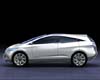
Hyundai's new hydrogen-powered, zero-emission concept, the i-Blue Fuel Cell Electric Vehicle (FCEV), debuted in North America at the 100th edition of the Chicago Auto Show. Developed at Hyundai's Design and Technical Center in Chiba, Japan, the i-Blue concept illustrates the design direction for a future FCEV production model. The all-new i-Blue platform features Hyundai's third-generation fuel cell technology, currently being developed at Hyundai's Eco-Technology Research Institute in Mabuk, Korea.


Memory Foam Mattress Review

Newsletters :: SpaceDaily Express :: SpaceWar Express :: TerraDaily Express :: Energy Daily
XML Feeds :: Space News :: Earth News :: War News :: Solar Energy News
  • Panasonic says to launch YouTube televisions
  • Internet changing consumer electronics world: Intel chief
  • Lenovo pitching PCs to wider French market
  • Taiwan handheld device shipments to surge: consultancy

  • Bigelow Aerospace And Lockheed Martin Converging On Terms For Launch Services
  • USAF Awards United Launch Alliance Three Delta IV Missions
  • Vandenberg Prepares For First Atlas V Launch
  • Khrunichev Center Signs New Contract For Proton-M Launches

  • Flapping-wing airplanes are envisioned
  • British-designed jet could reach Australia in under five hours
  • Birds Bats And Insects Hold Secrets For Aerospace Engineers
  • Whale-shaped floating hotel set for flight

  • Boeing, NG and L-3 All Developing US Navy's EPX prgram
  • Northrop Grumman Demonstrates Compatibility Of AEHF Satellite Interface With Terminals Using Extended-Data-Rate Waveform
  • Boeing Completes On-Orbit Handover Of Wideband Global SATCOM Satellite To USAF
  • Elbit Systems To Supply Royal Netherlands Army Advanced BMS

  • 3D breakthrough with updatable holographic displays
  • Kiev Radar Row Set To Inflame Tensions Part Two
  • Kiev Radar Row Set To Inflame Tensions Part One
  • BAE To Radar USAF Warning Receivers For C-130J Transports

  • Boeing Integrated Defense Systems Looks To Future With Leadership Changes
  • Raytheon Space and Airborne Systems Names Carey VP For ISR Systems
  • NASA Selects Jaiwon Shin To Head Aeronautics Research
  • NGC Names James Culmo VP Of Airborne Early Warning And Battle Management Programs

  • Indonesia To Develop New EO Satellite
  • Russia To Launch Space Project To Monitor The Arctic In 2010
  • New Radar Satellite Technique Sheds Light On Ocean Current Dynamics
  • SPACEHAB Subsidiary Wins NASA Orbiting Carbon Observatory Contract

  • Rx Networks Announces GPStream SUPL 1.0 AGPS Client With Extended Ephemeris Capability
  • US DoD Extends Savi's RFID II Contract
  • First Chevrolet Vehicle To Offer XM NavTraffic Service
  • Spirent Communications Extends Leadership In Testing Assisted GPS For Location Based Services

  • The content herein, unless otherwise known to be public domain, are Copyright 1995-2007 - SpaceDaily.AFP and UPI Wire Stories are copyright Agence France-Presse and United Press International. ESA Portal Reports are copyright European Space Agency. All NASA sourced material is public domain. Additional copyrights may apply in whole or part to other bona fide parties. Advertising does not imply endorsement,agreement or approval of any opinions, statements or information provided by SpaceDaily on any Web page published or hosted by SpaceDaily. Privacy Statement